Ping Pong Colored Icons: A Designer's Review for Embroidery
As a designer who spends more time staring at stitch simulations than most people care to admit, I approach new design assets with a healthy dose of skepticism. We have all been there: you download a file that looks crisp on the screen, only to find it turns into a bird's nest of thread once it hits the fabric. That is why I took a close look at the Ping Pong Colored Icons collection before committing it to any client work or handmade product lines. The description promises a "simple and clean design," which usually translates well to embroidery, but simplicity can be a double-edged sword if the details are too fine for the needle.
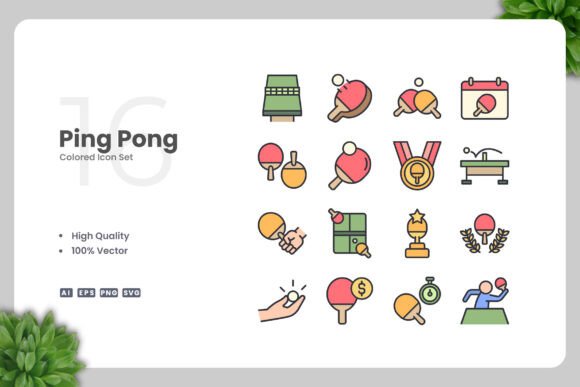
My first impression of these Icons was one of playful minimalism. In the world of Graphics, clean lines are trendy, but in the world of thread, they require precision. The mood here is energetic and sporty, perfectly capturing the spirit of the game without getting bogged down in unnecessary complexity. For an embroidery project, this is often a winning strategy. When I visualized these shapes translated into a machine embroidery design, I immediately thought about how the bold forms would hold up against different fabric textures. Unlike intricate floral patterns that rely on subtle shading, these icons rely on shape and color blocking, which suggests they would perform exceptionally well as a satin stitch application or a tight fill stitch depending on the specific file conversion.
Real-World Application: The Boutique Tote Bag Test
To truly evaluate the potential of Ping Pong Colored Icons, I imagined a specific real-life scenario that many Etsy sellers and craft business owners face daily: creating a line of custom tote bags for a local sports league or a summer camp. Tote bags are notorious for having a loose weave, which can cause small details to sink in or get lost. Because these icons are described as simple and clean, they are theoretically ideal for this medium. I could see using a vibrant green and orange palette to create a high-contrast tote bag design that pops against a natural canvas background.
In this scenario, the finished product needs to look professional enough to justify a premium price point but durable enough to carry gym gear. If I were stitching these onto a heavy-duty canvas, the lack of overly fine detail in the Ping Pong Colored Icons would be a major asset. There is less risk of the design losing its definition after a few washes compared to a highly detailed portrait. For a small shop product, consistency is key. These icons offer a uniform visual language that could easily be expanded into a full collection of custom apparel, matching aprons for coaches, or even embroidered patch sets for jackets.
Versatility Across Products and Fabrics
The true test of any digital embroidery file is its versatility. While the original description highlights uses for websites and print, my mind goes straight to textile applications. Here is how I see these icons fitting into various projects:
- Sweatshirt Embroidery: The thick, cozy texture of fleece or French terry can swallow small designs. The bold nature of these icons makes them a strong candidate for sweatshirt embroidery, provided the digitization accounts for the fabric push and pull.
- Baby Embroidery: For baby onesies or bibs, softness is paramount. A simplified version of these icons, perhaps using more running stitch outlines and less dense filling, could make for an adorable personalized gift that remains gentle on sensitive skin.
- Holiday Embroidery: Don't limit these to sports seasons. With a quick change of thread colors—perhaps red and white or metallic gold—they could easily become festive ornaments or holiday card accents, proving their worth as year-round design assets.
- Cap and Hat Decoration: Curved surfaces are tricky. The clean geometry of the Ping Pong Colored Icons suggests they would sit well on the front panel of a baseball cap, avoiding the distortion that often plagues complex curved designs.
Critical Considerations for the Stitcher
However, no design is perfect for every situation, and a responsible reviewer must point out where caution is needed. While the vector source allows for easy resizing and color changes, moving from vector to stitch requires careful planning. If you are working with a hoop size that forces the design to be very small, say under two inches, you must verify that the stitch density is appropriate. High density on a small scale can lead to thread breaks or a stiff, cardboard-like feel on the back of the garment.
Furthermore, consider the fabric type. On stretchy knits or thin performance fabrics, a dense fill stitch might cause puckering. In these cases, I would recommend testing an applique design approach where the icon shape is cut from fabric and stitched down, rather than filled entirely with thread. This not only solves the stability issue but adds a lovely textural dimension to the commercial embroidery piece. Also, be mindful of dark fabrics. If the icons rely on light pastel colors, they may vanish against navy or black unless you utilize a bright underlay or adjust the thread colors for higher contrast.
Maximizing Value and Professionalism
Ultimately, the goal of using a resource like Ping Pong Colored Icons is to elevate the perceived value of your work. Customers trust brands that present a cohesive look. Whether you are selling printable mockup previews online or handing over a physical personalized gift, the clarity of the design speaks to your professionalism. A clean icon signals attention to detail, whereas a muddy, poorly executed stitch job can undermine customer trust.
Before launching these into your Etsy listings or using them for client orders, I strongly advise running a few practical tests. Stitch the design on scrap fabric that matches your final product. Check the back of the hoop to ensure the bobbin thread isn't pulling through excessively. Compare how the design looks in a black-and-white mockup versus full color to ensure the shape holds up without relying solely on hue. Most importantly, since the source mentions editing in vector software, confirm the licensing terms regarding commercial embroidery. Ensure you have the right to sell the finished product or if there are restrictions on the number of items produced.
In conclusion, Ping Pong Colored Icons offers a promising foundation for creative entrepreneurs looking to add a sporty, modern touch to their catalog. Its strength lies in its adaptability and clean aesthetic, which translates well to the constraints of thread and needle. By respecting the limitations of fabric and machine, and by taking the time to test and tweak, you can turn these simple graphics into standout pieces that customers will love to wear and display.