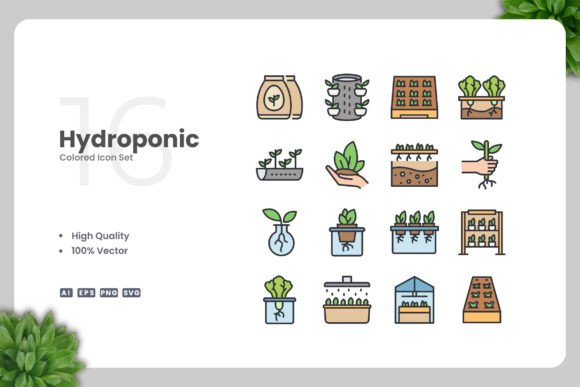
Hydroponic Colored Icons: A Designer's Stitch Review
As someone who spends more time staring at stitch maps than most people care to admit, I approach new design assets with a healthy dose of skepticism. We've all been there: you download a file that looks crisp on the screen, only to find it turns into a bird's nest of thread once it hits the fabric. That is why I took a close look at the Hydroponic Colored Icons collection before committing to a full production run for a client. The promise here is simplicity and clean lines, which usually translates well to embroidery, but the devil is always in the details.
My first impression of these Icons was their modern, flat aesthetic. They carry a mood that is fresh, organic, and slightly tech-forward, which fits perfectly with the current trend of bringing nature indoors. Visually, they feel lightweight. For an embroidery project, this is often a good thing. Heavy, dense designs can warp lightweight fabrics, but these graphics seem to rely on clear shapes rather than excessive coverage. When I loaded the digital embroidery file into my editing software, the layout felt intuitive. The separation of colors suggests that converting these from vector Graphics to a machine embroidery design should be straightforward, provided you respect the original geometry.
Putting the Design to the Test: A Real-World Scenario
To truly evaluate the potential of Hydroponic Colored Icons, I imagined a specific real-life scenario that many of us face: a custom order for a local urban gardening shop. The client wanted a series of branded tote bag designs and matching aprons for their staff. The goal was to create something that looked professional but retained a handmade charm.
I selected one of the simpler icons from the set—a stylized leaf system—and prepared it for stitching. On a canvas tote, the result was impressive. The clean lines of the icon translated beautifully into satin stitch borders with a light fill stitch interior. Because the design avoids overly intricate tiny details, it maintained its clarity even on the textured surface of the canvas. For the aprons, which were made of a tighter weave cotton, the thread colors popped vibrantly against the dark fabric. This is where the "colored" aspect of the title shines; the palette feels curated for visibility without clashing. If you are an Etsy seller or running a craft business, this kind of versatility is gold. It allows you to offer personalized gifts or small shop products that look consistent across different materials.
Versatility Across Custom Apparel and Home Goods
Beyond bags and aprons, I can see these Icons working exceptionally well for sweatshirt embroidery. The slightly thicker nature of fleece or French terry requires designs that don't get lost in the pile. The bold shapes in this collection hold up well here. Imagine a line of baby embroidery items—onesies or bibs featuring these gentle hydroponic motifs. The soft, rounded edges of the graphics feel safe and appealing for nursery decor.
For those interested in creating embroidered patches, this set is a strong contender. Patches require designs that can be cut out cleanly after stitching. Since these graphics are relatively self-contained and lack wispy, disconnected elements, they would digitize into a merrowed edge patch very effectively. You could also adapt them for holiday embroidery by swapping the thread palette to seasonal tones, turning a standard plant icon into a festive gift tag or ornament detail. The key is that the core shape remains recognizable regardless of the color scheme you apply.
Navigating Fabric Textures and Hoop Limitations
However, no design is perfect for every situation, and practical judgment is required. While Hydroponic Colored Icons are clean, you must be careful when working with highly textured fabrics like heavy wool or looped towels. Fine details can get swallowed up by the fabric texture. If you are stitching on a tea towel or a thick blanket, you might need to simplify the stitch density or enlarge the design slightly to ensure the running stitch outlines remain visible.
Another consideration is the hoop size. If you are working on curved surfaces like caps or hats, the available stitching area is limited. Some of the more complex icons in the set might need to be scaled down, which risks losing definition. Always test your resized version on a scrap piece of similar material first. Additionally, if you are using stretchy fabrics for custom apparel, the stability of the design becomes crucial. A design that looks stable on screen might pucker if the stabilizer isn't robust enough. For these icons, I recommend a cut-away stabilizer for garments that will undergo frequent washing, ensuring the finished product retains its shape over time.
Enhancing Brand Value and Customer Trust
From a business perspective, the visual appeal of your work directly impacts customer trust. Using high-quality, coherent design assets like Hydroponic Colored Icons helps maintain brand consistency. When a customer sees a clean, well-executed logo or motif on a product, it signals professionalism. Whether you are selling printable mockups to show clients what the final item will look like or presenting the actual handmade product at a craft fair, clarity sells. These icons have a modern personality that resonates with today's eco-conscious consumers, potentially increasing buyer engagement for shops focused on sustainability.
It is also worth noting the importance of checking the license before diving into commercial embroidery. While the description mentions ease of editing in vector software, you must confirm the specific terms regarding resale of the embroidery file versus the sale of physical items. Most designers allow the sale of finished goods but restrict the redistribution of the digital file itself. Always read the fine print to protect your craft business.
Final Thoughts for the Practical Maker
In conclusion, Hydroponic Colored Icons offers a solid foundation for a variety of creative projects. They are not just decorative; they are functional graphics that translate well into thread when handled with care. My advice is to start by testing the design on scrap fabric to check color contrast and density. Try it in black and white first to see if the shape holds up without relying on color differentiation. Compare how it looks on light versus dark backgrounds to gauge the necessary underlay.
If you are looking to expand your catalog of personalized products or need reliable imagery for a boutique branding project, these icons are a worthy addition to your library. They strike a balance between artistic flair and technical feasibility, making them suitable for both hobbyists and seasoned embroidery designers. Just remember, the quality of the finished product ultimately depends on your setup, your materials, and your attention to the nuances of the stitch. With the right preparation, these icons can elevate your work from simple decoration to standout art.